


“Experience the thrill of gliding above the water with our beginner’s guide to E-foiling.”
E-foiling, also known as electric foiling, is a thrilling water sport that combines the excitement of surfing with the ease of motorized propulsion. It involves riding a hydrofoil board, which is equipped with an electric motor and a wing-like foil underneath. This allows the rider to glide above the water’s surface at high speeds, providing a unique and exhilarating experience. If you’re interested in trying out this exciting sport, this beginner’s guide will provide you with all the information you need to get started with e-foiling. From equipment and safety tips to learning the proper techniques, this guide will help you embark on your e-foiling journey with confidence. So, let’s dive in and discover how to get started with e-foiling!
E-foiling, also known as electric foiling, is a relatively new water sport that has been gaining popularity in recent years. It involves riding a hydrofoil board, which is equipped with an electric motor and a propeller, over the surface of the water. This allows riders to glide above the water at high speeds, providing a thrilling and unique experience. If you’re someone who loves water sports and is looking for a new challenge, then e-foiling might just be the perfect activity for you. In this beginner’s guide, we’ll cover the basics of e-foiling and everything you need to know before you get started.
First and foremost, it’s important to understand that e-foiling is not the same as traditional foiling. Traditional foiling involves using a sail or kite to propel the board, while e-foiling uses an electric motor. This means that e-foiling requires less physical effort and can be enjoyed by people of all ages and fitness levels. However, it’s still important to have some basic knowledge and skills before you hit the water.
The first thing you need to know is that e-foiling can be an expensive sport. The equipment, including the board, motor, and battery, can cost thousands of dollars. Therefore, it’s important to do your research and invest in high-quality equipment that will last you a long time. It’s also a good idea to try out different boards and motors before making a purchase, as each one may have a different feel and performance.
Once you have your equipment, it’s time to learn the basics of e-foiling. The most important skill to master is balance. E-foiling requires a lot of balance and control, as you’ll be riding on a small hydrofoil board that is lifted above the water. It’s recommended to start on calm, flat water and practice standing on the board and shifting your weight from side to side. This will help you get a feel for the board and how it responds to your movements.
Another important aspect of e-foiling is safety. As with any water sport, it’s crucial to wear a life jacket and a helmet while e-foiling. It’s also a good idea to have a spotter on the shore to keep an eye on you and assist in case of an emergency. Additionally, make sure to familiarize yourself with the rules and regulations of the waterway you’ll be riding in, as well as any local laws regarding e-foiling.
Now that you have a basic understanding of e-foiling, it’s time to get on the water. It’s recommended to start in shallow water and gradually work your way to deeper water as you gain more experience. When starting, it’s important to keep your speed low and gradually increase it as you become more comfortable. It’s also helpful to have an experienced e-foiler give you some tips and guidance as you learn.
As with any new sport, it’s important to be patient and not get discouraged if you don’t get the hang of it right away. E-foiling takes time and practice to master, but the feeling of gliding above the water is well worth the effort. Remember to always prioritize safety and have fun while learning.
In conclusion, e-foiling is an exciting and unique water sport that is gaining popularity around the world. With the right equipment, knowledge, and skills, anyone can enjoy the thrill of riding an electric hydrofoil board. Just remember to start slow, prioritize safety, and have fun. So what are you waiting for? Get out there and start e-foiling today!
E-foiling, also known as electric foiling, is a thrilling water sport that has been gaining popularity in recent years. It involves riding a board equipped with a hydrofoil and an electric motor, allowing riders to glide above the water at high speeds. If you’re a beginner looking to get started with e-foiling, one of the first things you’ll need to do is choose the right E-foil board. With so many options available on the market, it can be overwhelming to know where to start. But fear not, this beginner’s guide will walk you through the factors to consider when choosing the perfect E-foil board for your needs.
The first factor to consider is your skill level. E-foiling can be a challenging sport, especially for beginners. If you’re new to the sport, it’s essential to choose an E-foil board that is suitable for beginners. These boards are typically larger and more stable, making it easier for beginners to balance and control. As you gain more experience and confidence, you can upgrade to a more advanced board.
Next, you’ll want to consider the size and weight of the board. E-foil boards come in various sizes and weights, and choosing the right one for your body type and riding style is crucial. A larger board will provide more stability, making it easier for beginners to learn. On the other hand, a smaller board will be more maneuverable and better suited for experienced riders. Additionally, the weight of the board can affect its performance. A lighter board will be more responsive and easier to control, while a heavier board may be more stable but require more effort to maneuver.
Another essential factor to consider is the type of foil. The foil is the wing-shaped structure attached to the bottom of the board that lifts it out of the water. There are two main types of foils: surf foils and kite foils. Surf foils are designed for riding waves, while kite foils are better suited for flat water. If you’re planning on riding in the ocean, a surf foil would be the best choice. However, if you’re going to ride on lakes or rivers, a kite foil would be more suitable.
The material of the board is also an important consideration. E-foil boards are typically made from either carbon fiber or aluminum. Carbon fiber boards are lighter, more responsive, and more expensive. On the other hand, aluminum boards are more affordable but heavier and less responsive. If you’re a beginner, an aluminum board may be a better option as it will be more forgiving and less expensive to replace if damaged.
Next, you’ll want to think about the battery life and charging time of the board. E-foil boards are powered by rechargeable batteries, and the battery life can vary depending on the board’s size and motor power. It’s essential to choose a board with a battery life that will allow you to ride for a decent amount of time without needing to recharge. Additionally, consider the charging time of the board. Some boards may take longer to charge, which can be inconvenient if you’re eager to get back on the water.
Lastly, don’t forget to consider the price of the board. E-foil boards can range from a few thousand dollars to tens of thousands of dollars. As a beginner, it may be tempting to go for a cheaper option, but keep in mind that a higher-priced board may offer better performance and durability. It’s essential to find a balance between your budget and the features you want in a board.
In conclusion, choosing the right E-foil board is crucial for a successful and enjoyable e-foiling experience. Consider your skill level, the size and weight of the board, the type of foil, the material, battery life and charging time, and the price when making your decision. With the right board, you’ll be gliding above the water in no time, experiencing the thrill and excitement of e-foiling. So, what are you waiting for? Get out there and start your e-foiling journey today!
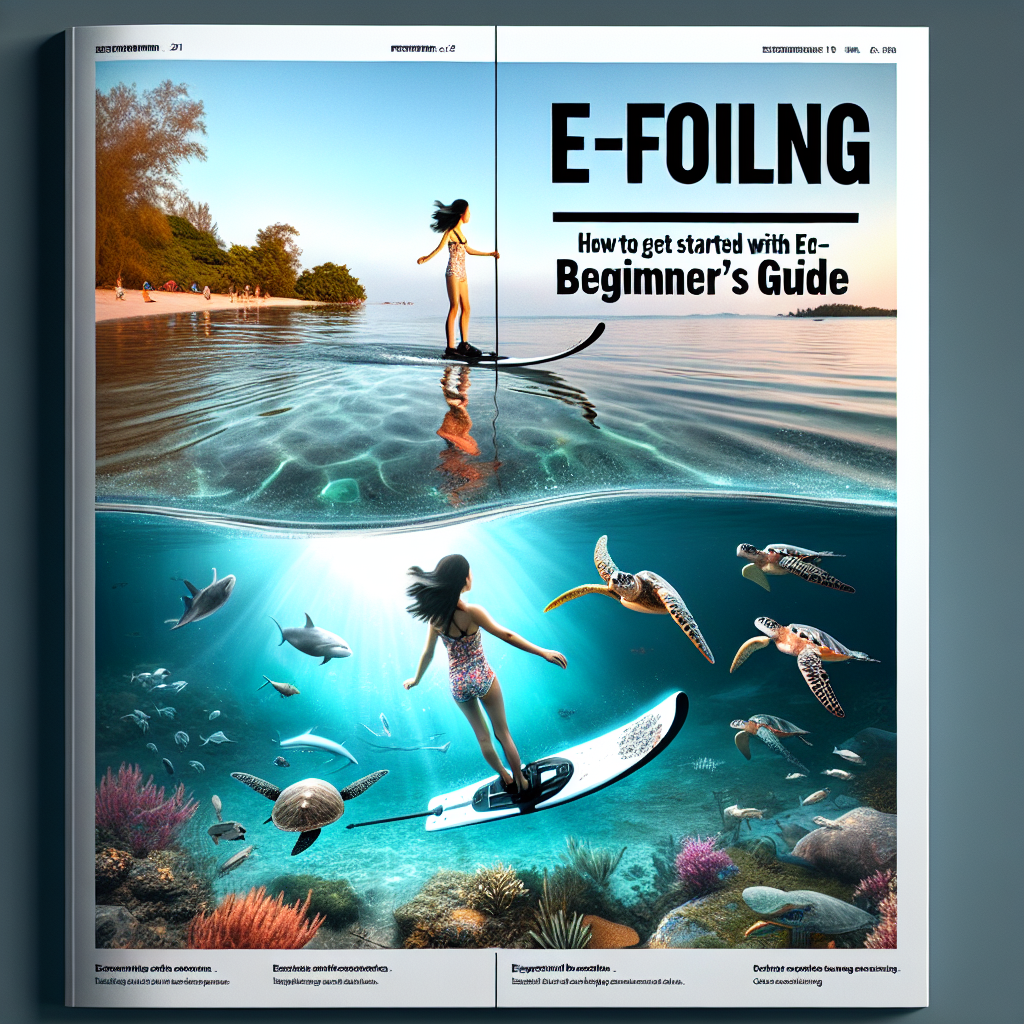
E-foiling, also known as electric foiling, is a thrilling water sport that has been gaining popularity in recent years. It involves riding on a board equipped with a hydrofoil and an electric motor, allowing you to glide above the water’s surface at high speeds. If you’re new to e-foiling, the idea of balancing on a board while being propelled by an electric motor may seem daunting. However, with the right techniques and practice, anyone can master the art of balancing on an E-foil board.
The first step to mastering the art of balancing on an E-foil board is to choose the right equipment. E-foiling requires a specialized board with a hydrofoil attached to the bottom. The hydrofoil is a wing-shaped structure that creates lift and allows the board to rise above the water. It’s essential to choose a board that is suitable for your weight and skill level. A larger board will provide more stability, making it easier for beginners to balance. As you progress, you can switch to a smaller board for a more challenging and thrilling ride.
Once you have the right equipment, it’s time to get on the water and start practicing. The key to balancing on an E-foil board is to find your center of gravity. This is the point where your weight is evenly distributed, and you feel stable and in control. To find your center of gravity, stand on the board with your feet shoulder-width apart and your knees slightly bent. Keep your arms out to the sides for balance and focus on keeping your weight centered between your feet.
As you start moving, it’s crucial to maintain a relaxed and fluid stance. Tensing up or standing too rigidly can throw off your balance and make it harder to control the board. Keep your knees bent and your body loose, allowing your legs to absorb any bumps or waves in the water. It’s also essential to keep your eyes focused on the horizon rather than looking down at your feet. This will help you maintain your balance and keep your body in the correct position.
Another helpful tip for balancing on an E-foil board is to use your arms for balance. As you start to feel more comfortable on the board, you can use your arms to make small adjustments to your balance. For example, if you feel yourself leaning too far to one side, you can use your arms to shift your weight back to the center. It’s essential to keep your arms relaxed and not use them to try and control the board’s movement. Instead, use them as a tool to help you maintain your balance.
As with any new skill, practice makes perfect when it comes to balancing on an E-foil board. It’s essential to start slow and gradually increase your speed and maneuverability as you become more comfortable on the board. Don’t get discouraged if you fall off a few times; it’s all part of the learning process. Remember to take breaks and rest when needed, as e-foiling can be physically demanding.
In addition to practicing on the water, you can also work on your balance and core strength on land. Exercises such as yoga, Pilates, and balance training can help improve your stability and make it easier to balance on the E-foil board. It’s also essential to stay hydrated and fuel your body with nutritious foods to maintain your energy levels while e-foiling.
In conclusion, balancing on an E-foil board may seem challenging at first, but with the right techniques and practice, anyone can master it. Remember to choose the right equipment, find your center of gravity, maintain a relaxed stance, and use your arms for balance. With dedication and perseverance, you’ll be gliding above the water like a pro in no time. So grab your E-foil board and get ready for an exhilarating ride!
E-foiling, also known as electric foiling, is a thrilling water sport that has been gaining popularity in recent years. It involves riding a hydrofoil board powered by an electric motor, allowing riders to glide above the water at high speeds. While it may seem like an intimidating sport, with the right safety precautions, anyone can enjoy the exhilarating experience of e-foiling. In this beginner’s guide, we will discuss some essential safety tips to help you stay safe on the water while e-foiling.
First and foremost, it is crucial to always wear a personal flotation device (PFD) while e-foiling. This is a non-negotiable safety measure that should be followed by all riders, regardless of their swimming abilities. In case of any accidents or falls, a PFD will keep you afloat and prevent you from drowning. Make sure to choose a PFD that is specifically designed for water sports and fits you comfortably.
Another essential safety tip is to always wear a helmet while e-foiling. Just like any other water sport, there is always a risk of falling and hitting your head. A helmet will protect your head from any impact and reduce the risk of serious injuries. Make sure to choose a helmet that is specifically designed for water sports and fits you properly.
Before heading out on the water, it is crucial to check the weather conditions. E-foiling in rough weather conditions can be dangerous, especially for beginners. Strong winds and high waves can make it challenging to control the board, increasing the risk of accidents. Always check the weather forecast and avoid e-foiling in adverse weather conditions.
When e-foiling, it is essential to be aware of your surroundings at all times. Keep an eye out for other boats, swimmers, and any potential hazards in the water. It is also crucial to stay away from areas with heavy boat traffic. E-foiling in crowded areas can be dangerous, and it is best to find a quiet spot to enjoy the sport.
Just like any other water sport, it is essential to know your limits while e-foiling. As a beginner, it is crucial to start slow and gradually increase your speed and skills. Trying to do too much too soon can lead to accidents and injuries. Take your time to get comfortable with the board and the motor before attempting any advanced maneuvers.
It is also crucial to have a basic understanding of the rules and regulations of the waterway you are e-foiling in. Different areas may have different rules and restrictions, and it is essential to follow them to ensure your safety and the safety of others. For example, some areas may have speed limits or designated areas for water sports. Make sure to familiarize yourself with these rules before heading out on the water.
In addition to these safety tips, it is also essential to have the right equipment while e-foiling. Apart from a PFD and a helmet, it is crucial to have a leash attached to your board. This will prevent the board from drifting away in case of a fall. It is also recommended to have a whistle or a signaling device in case of emergencies.
Lastly, it is crucial to E-foil with a buddy or in a group. Not only is it more fun to share the experience with others, but it also adds an extra layer of safety. In case of any accidents or emergencies, having someone with you can make all the difference.
In conclusion, e-foiling is an exciting and exhilarating water sport that can be enjoyed by people of all ages. However, it is essential to prioritize safety while e-foiling. Always wear a PFD and a helmet, check the weather conditions, be aware of your surroundings, know your limits, and have the right equipment. With these safety tips in mind, you can have a safe and enjoyable e-foiling experience. So, grab your board, head out on the water, and have a blast e-foiling!
E-foiling, also known as electric foiling, is a thrilling water sport that has been gaining popularity in recent years. It involves riding a hydrofoil board that is powered by an electric motor, allowing you to glide above the water’s surface at high speeds. If you’re new to e-foiling, it may seem intimidating at first, but with the right knowledge and practice, anyone can learn how to maneuver and control their board like a pro. In this beginner’s guide, we’ll walk you through the basics of e-foiling and give you some tips on how to get started.
The first step in understanding E-foil controls is to familiarize yourself with the components of the board. The main parts of an E-foil board include the hydrofoil, the electric motor, the battery, and the remote control. The hydrofoil is the wing-shaped structure that extends below the board and lifts it out of the water. The electric motor is what powers the board, and the battery provides the energy for the motor to run. The remote control is used to control the speed and direction of the board.
Once you have a basic understanding of the components, it’s time to learn how to maneuver and control your board. The most important thing to remember is that e-foiling is all about balance and weight distribution. To start, you’ll need to stand on the board with your feet shoulder-width apart, keeping your weight centered over the board. This will help you maintain stability and control as you ride.
To move forward, you’ll need to use the remote control to increase the speed of the motor. As the motor propels the board forward, the hydrofoil will lift the board out of the water, allowing you to glide smoothly. It’s important to start with a slow speed and gradually increase it as you gain more confidence and control. Remember to keep your weight centered and use your core muscles to maintain balance.
To turn, you’ll need to shift your weight to one side of the board. For example, if you want to turn left, you’ll need to lean your body to the left, putting more weight on your left foot. This will cause the board to tilt in that direction, and the hydrofoil will steer the board accordingly. It’s important to keep your movements smooth and gradual to avoid losing balance. You can also use the remote control to adjust the speed and direction of the motor to help you turn.
Another important aspect of E-foil controls is learning how to stop and slow down. To slow down, you can decrease the speed of the motor using the remote control. You can also use your body weight to shift back and lower the board into the water, reducing the speed. To come to a complete stop, you’ll need to shift your weight back and use the remote control to turn off the motor. It’s essential to practice these maneuvers in a safe and open area to avoid any accidents.
As with any new sport, it takes time and practice to master e-foiling. Don’t get discouraged if you don’t get the hang of it right away. It’s important to start slow and gradually increase your speed and maneuvering skills. You can also take lessons from a professional e-foiler to learn the proper techniques and safety measures.
In conclusion, understanding E-foil controls is crucial for anyone looking to get started with this exciting water sport. Remember to familiarize yourself with the components of the board, maintain balance and weight distribution, and practice your maneuvers in a safe environment. With dedication and practice, you’ll be gliding above the water like a pro in no time. So grab your board, put on your safety gear, and get ready for an exhilarating e-foiling experience!
E-foiling, also known as electric foiling, is a thrilling water sport that has been gaining popularity in recent years. It involves riding a hydrofoil board that is powered by an electric motor, allowing riders to glide above the water at high speeds. If you’re new to e-foiling, you may be wondering how to get started and what you need to know to keep your board in top condition. In this beginner’s guide, we’ll cover the basics of e-foiling maintenance to help you get the most out of your experience.
First and foremost, it’s important to understand the components of your E-foil board. The main parts include the board, the hydrofoil, and the electric motor. The board is similar to a traditional surfboard, but with a hydrofoil attached to the bottom. The hydrofoil is a wing-shaped structure that extends below the board and lifts it out of the water. The electric motor is what powers the hydrofoil and allows you to ride above the water’s surface.
Now that you have a basic understanding of the components, let’s dive into the maintenance aspect of e-foiling. The most important thing to remember is to always rinse your board with fresh water after each use. This is especially crucial if you’re riding in saltwater, as the salt can cause corrosion and damage to your board over time. Use a hose or a bucket of water to thoroughly rinse off any salt or debris from your board.
In addition to rinsing, it’s also important to dry off your board before storing it. Leaving your board wet can lead to mold and mildew growth, which can cause damage and affect the performance of your board. Use a towel or let it air dry before storing it in a cool, dry place.
Another key aspect of E-foil maintenance is checking and tightening all the screws and bolts on your board. The vibrations from riding can cause these to loosen over time, so it’s important to regularly check and tighten them to ensure your board is secure. This will also prevent any parts from falling off while you’re riding, which could be dangerous.
It’s also a good idea to inspect your board for any cracks or damage before each use. If you notice any cracks, it’s best to get them repaired before they worsen and potentially cause more damage. You can also apply a protective coating or wax to your board to help prevent scratches and dings.
In terms of the hydrofoil, it’s important to regularly check and clean the wings and mast. These can accumulate algae and other debris, which can affect the performance of your board. Use a soft cloth and some mild soap to gently clean the wings and mast, and make sure to rinse them thoroughly afterwards.
The electric motor is the heart of your E-foil board, so it’s crucial to take good care of it. After each use, make sure to dry off the motor and check for any signs of damage or wear. If you notice any issues, it’s best to take it to a professional for repairs. It’s also important to follow the manufacturer’s instructions for charging the battery and storing it properly when not in use.
In conclusion, e-foiling is an exhilarating water sport that requires proper maintenance to keep your board in top condition. By regularly rinsing, drying, and inspecting your board, as well as checking and tightening all the screws and bolts, you can ensure a safe and enjoyable e-foiling experience. Remember to also take care of the hydrofoil and electric motor, and always follow the manufacturer’s instructions for maintenance and storage. With these tips in mind, you’ll be well on your way to becoming an e-foiling pro in no time.
E-foiling, also known as electric hydrofoiling, is a thrilling water sport that has been gaining popularity in recent years. It involves riding a board equipped with a hydrofoil and an electric motor, allowing riders to glide above the water at high speeds. If you’re new to e-foiling, it can seem intimidating at first, but with the right gear and some practice, you’ll be riding like a pro in no time. In this article, we’ll discuss the must-have accessories for a successful e-foiling experience.
First and foremost, you’ll need an E-foil board. This is the most crucial piece of equipment as it provides the platform for you to stand on and ride. When choosing an E-foil board, there are a few things to consider. The size and shape of the board will affect its stability and maneuverability. For beginners, it’s recommended to start with a larger board as it will be more stable and easier to control. As you gain more experience, you can switch to a smaller board for more speed and agility.
Next, you’ll need an E-foil wing. This is the hydrofoil attached to the bottom of the board that lifts you out of the water. The size and shape of the wing will determine how high and fast you can ride. For beginners, a larger wing is recommended as it provides more lift and stability. As you progress, you can switch to a smaller wing for more speed and maneuverability.
Another essential accessory is the E-foil battery. This is what powers the electric motor and allows you to ride for an extended period. The battery’s size and capacity will affect how long you can ride, so it’s essential to choose one that suits your needs. Most E-foil batteries can last anywhere from 45 minutes to 2 hours, depending on the speed and weight of the rider.
To control the E-foil, you’ll need a handheld remote. This device allows you to adjust the speed and power of the electric motor, giving you full control over your ride. The remote is usually attached to a leash that you wear around your wrist, ensuring that it stays with you even if you fall off the board. It’s crucial to practice using the remote before getting on the water to ensure you’re comfortable with its functions.
Safety is always a top priority when participating in any water sport, and e-foiling is no exception. A personal flotation device (PFD) is a must-have accessory for e-foiling. It will keep you afloat in case you fall off the board and can also provide some protection against impact with the water. It’s essential to choose a PFD that is specifically designed for water sports and fits you comfortably.
In addition to the PFD, a helmet is also recommended for e-foiling. While the water may seem like a soft landing, falling from high speeds can still cause injury. A helmet will protect your head in case of a fall and is especially important for beginners who are still learning to control the E-foil.
Lastly, you’ll need a board bag to transport and store your E-foil board. These bags are specially designed to fit the shape of the board and protect it from damage during transportation. They also have extra pockets for storing accessories such as the remote and battery.
In conclusion, e-foiling is an exhilarating water sport that requires the right gear for a successful ride. A board, wing, battery, remote, PFD, helmet, and board bag are all essential accessories that will enhance your e-foiling experience. It’s crucial to choose high-quality gear that fits your needs and skill level. With the right equipment and some practice, you’ll be gliding above the water and experiencing the thrill of e-foiling in no time. So what are you waiting for? Get your gear and hit the water for an unforgettable e-foiling adventure!
E-foiling, also known as electric hydrofoil surfing, is a thrilling and innovative water sport that has been gaining popularity in recent years. With the use of a battery-powered motor and a hydrofoil, riders can glide above the water at high speeds, providing a unique and exhilarating experience. If you’re a beginner looking to get started with e-foiling, one of the first things you’ll need to consider is finding the perfect spot to practice this exciting sport. In this article, we’ll provide you with some tips for choosing the right location to get started with e-foiling.
The first thing to keep in mind when looking for a spot to E-foil is safety. As a beginner, it’s important to choose a location that is safe and suitable for your skill level. This means avoiding areas with strong currents, rocks, or other hazards that could potentially cause harm. It’s also important to check the weather conditions before heading out, as strong winds and rough waters can make e-foiling more challenging and dangerous.
Another factor to consider when choosing a location for e-foiling is the water depth. E-foiling requires a certain depth of water to allow the hydrofoil to lift and glide smoothly. Generally, a depth of at least 6 feet is recommended for beginners. This will give you enough room to maneuver and avoid any potential hazards under the water. It’s also important to note that the depth of the water can vary depending on the tide, so be sure to check the tide schedule before heading out.
In addition to safety and water depth, the type of water also plays a significant role in choosing the right location for e-foiling. Flat and calm waters are ideal for beginners as they provide a stable and smooth surface to practice on. Lakes, bays, and sheltered coves are great options for e-foiling, as they tend to have less wind and waves compared to open ocean areas. However, if you’re feeling more adventurous and have some experience under your belt, you can also try e-foiling in the ocean. Just be sure to choose a spot with gentle waves and avoid crowded areas to ensure your safety and the safety of others.
Another important aspect to consider when choosing a location for e-foiling is accessibility. You’ll want to choose a spot that is easily accessible and has enough space for you to launch and land your E-foil. Look for areas with a sandy beach or a designated launch area for water sports. It’s also a good idea to choose a spot with nearby parking and facilities such as restrooms and showers.
Lastly, it’s important to consider the local regulations and rules when choosing a location for e-foiling. Some areas may have restrictions on water sports, so be sure to do your research beforehand. It’s also important to be respectful of other water users and follow any designated water traffic patterns to avoid any accidents.
In conclusion, finding the perfect spot for e-foiling is crucial for a safe and enjoyable experience. Remember to prioritize safety, choose a suitable water depth, consider the type of water, ensure accessibility, and follow any local regulations. With these tips in mind, you’ll be well on your way to mastering the art of e-foiling and enjoying this thrilling water sport. So grab your E-foil and head out to your chosen location for an unforgettable experience on the water!
E-foiling, also known as electric foiling, is a thrilling water sport that has been gaining popularity in recent years. It involves riding a hydrofoil board powered by an electric motor, allowing riders to glide above the water at high speeds. As with any water sport, it is important to follow proper etiquette to ensure the safety and enjoyment of all water users. In this article, we will discuss some key tips on how to respect other water users while e-foiling.
First and foremost, it is crucial to be aware of your surroundings at all times. E-foiling can be an exhilarating experience, but it is important to remember that you are sharing the water with other people. Keep an eye out for swimmers, kayakers, and other watercrafts, and always give them plenty of space. It is also important to be mindful of your speed, especially in crowded areas. Going too fast can be dangerous for both yourself and others, so always be cautious and considerate.
Another important aspect of e-foiling etiquette is to be respectful of other water users’ right of way. Just like on the road, there are rules and regulations for water traffic. In general, the larger and less maneuverable watercraft has the right of way. This means that as an e-foiler, you should yield to sailboats, motorboats, and other larger vessels. It is also important to give way to non-motorized watercrafts such as kayaks and paddleboards. By following these rules, you can avoid potential collisions and ensure a safe and enjoyable experience for everyone.
In addition to being aware of your surroundings and respecting right of way, it is also important to communicate with other water users. This can be as simple as using hand signals or verbal cues to let others know your intentions. For example, if you are approaching a group of swimmers, it is courteous to signal that you will be passing by on their left or right. This allows them to adjust their course and avoid any potential accidents. Similarly, if you see a boat or another watercraft approaching, make sure to signal your intentions and give them enough space to pass.
One aspect of e-foiling etiquette that is often overlooked is the impact of your wake on other water users. E-foiling can create a significant wake, especially at high speeds. This can be disruptive and even dangerous for other water users, particularly for smaller vessels. To minimize the impact of your wake, try to maintain a consistent speed and avoid sharp turns. It is also important to be mindful of the direction of your wake and avoid creating large waves in crowded areas.
Last but not least, it is important to always be respectful and courteous to other water users. This means avoiding reckless behavior, such as showing off or trying to intimidate others. Remember that everyone is out on the water to have a good time, and it is important to create a positive and welcoming environment for all. If you encounter any conflicts or misunderstandings, try to resolve them calmly and respectfully.
In conclusion, e-foiling is an exciting and fast-paced water sport that requires proper etiquette to ensure the safety and enjoyment of all water users. By being aware of your surroundings, respecting right of way, communicating with others, and being mindful of your wake, you can help create a positive and harmonious environment on the water. So, get out there, have fun, and remember to always be respectful of others while e-foiling. Happy riding!
E-foiling, also known as electric hydrofoiling, is a thrilling water sport that has been gaining popularity in recent years. It combines the excitement of surfing with the speed and agility of flying above the water’s surface. If you’re a beginner looking to get started with e-foiling, this article is for you. We’ll cover the basics of e-foiling and provide some tips and tricks to help you take your skills to the next level.
First and foremost, it’s important to understand the equipment you’ll need for e-foiling. The main component is the E-foil board, which is similar to a traditional surfboard but with a hydrofoil attached to the bottom. The hydrofoil is what allows the board to lift out of the water and glide smoothly above the surface. You’ll also need a remote control to control the speed and direction of the board, as well as a battery pack to power the electric motor.
Before you hit the water, it’s crucial to familiarize yourself with the safety precautions of e-foiling. Always wear a life jacket and a helmet, and make sure to stay within designated e-foiling areas. It’s also important to have a basic understanding of the weather and water conditions before heading out. Strong winds and choppy waters can make e-foiling more challenging, so it’s best to start in calmer conditions.
Now that you have your equipment and safety measures in place, it’s time to get on the water. The key to successful e-foiling is balance and control. Start by lying on the board and using the remote control to gradually increase the speed. As the board lifts out of the water, shift your weight to maintain balance and keep the board level. It may take a few tries to get the hang of it, but with practice, you’ll be gliding effortlessly above the water in no time.
Once you’ve mastered the basics, it’s time to take your e-foiling to the next level with some advanced techniques and tricks. One of the most exciting aspects of e-foiling is the ability to perform aerial maneuvers. To do this, you’ll need to build up speed and then use your weight to lift the board out of the water. As you become more comfortable with this, you can start experimenting with different tricks such as 360 spins and flips.
Another advanced technique is pumping, which involves using your legs to generate momentum and keep the board moving without relying on the motor. This can be useful when the battery is running low or if you want to challenge yourself and improve your skills. It takes practice and coordination, but once you’ve mastered pumping, you’ll have more control and versatility on the water.
As with any sport, it’s essential to continue learning and improving your skills. One way to do this is by watching tutorials and videos from experienced e-foilers. You can also join a local e-foiling community or take lessons from a professional instructor. Not only will this help you learn new techniques, but it’s also a great way to connect with other e-foilers and share tips and tricks.
In addition to advanced techniques, there are also some tips and tricks that can help enhance your overall e-foiling experience. For example, choosing the right board and hydrofoil for your skill level and body weight can make a significant difference in your performance. It’s also important to maintain your equipment and regularly check for any wear and tear.
In conclusion, e-foiling is an exhilarating water sport that offers endless possibilities for beginners and advanced riders alike. By following these tips and techniques, you can get started with e-foiling and take your skills to the next level. Remember to always prioritize safety and have fun while gliding above the water’s surface. Happy e-foiling!
1. What is e-foiling?
E-foiling is a water sport that involves riding a hydrofoil board powered by an electric motor and controlled by a handheld remote.
2. How does e-foiling work?
The electric motor propels the board forward, while the hydrofoil design lifts the board out of the water, reducing drag and allowing for a smooth and effortless ride.
3. Is e-foiling difficult to learn?
E-foiling can be challenging for beginners, but with proper instruction and practice, it can be mastered relatively quickly.
4. What equipment do I need to get started with e-foiling?
To get started with e-foiling, you will need an E-foil board, a hydrofoil, an electric motor, a handheld remote, and a personal flotation device.
5. Do I need any prior experience to try e-foiling?
No prior experience is necessary, but it can be helpful to have some experience with other water sports such as surfing or wakeboarding.
6. Where can I try e-foiling?
E-foiling can be done on any body of water that is large enough and has minimal boat traffic. Many E-foil rental companies offer lessons and guided tours.
7. How much does it cost to get started with e-foiling?
The cost of getting started with e-foiling can vary depending on the equipment and lessons you choose. On average, it can cost anywhere from $5,000 to $10,000.
8. Is e-foiling safe?
E-foiling can be safe as long as proper safety precautions are taken, such as wearing a personal flotation device and following instructions from experienced instructors.
9. What are the benefits of e-foiling?
E-foiling provides a unique and exhilarating experience on the water, and it is also a low-impact activity that can be enjoyed by people of all ages and fitness levels.
10. Can I E-foil in any weather conditions?
E-foiling is best done in calm and flat water conditions, but it can also be done in light winds and small waves. It is not recommended to E-foil in strong winds or rough waters.
In conclusion, getting started with e-foiling can be an exciting and rewarding experience for beginners. It is important to first familiarize yourself with the equipment and safety precautions, as well as finding a suitable location for practicing. With proper instruction and practice, anyone can learn how to E-foil and enjoy the thrill of gliding above the water. Remember to always prioritize safety and have fun while learning this exhilarating water sport.